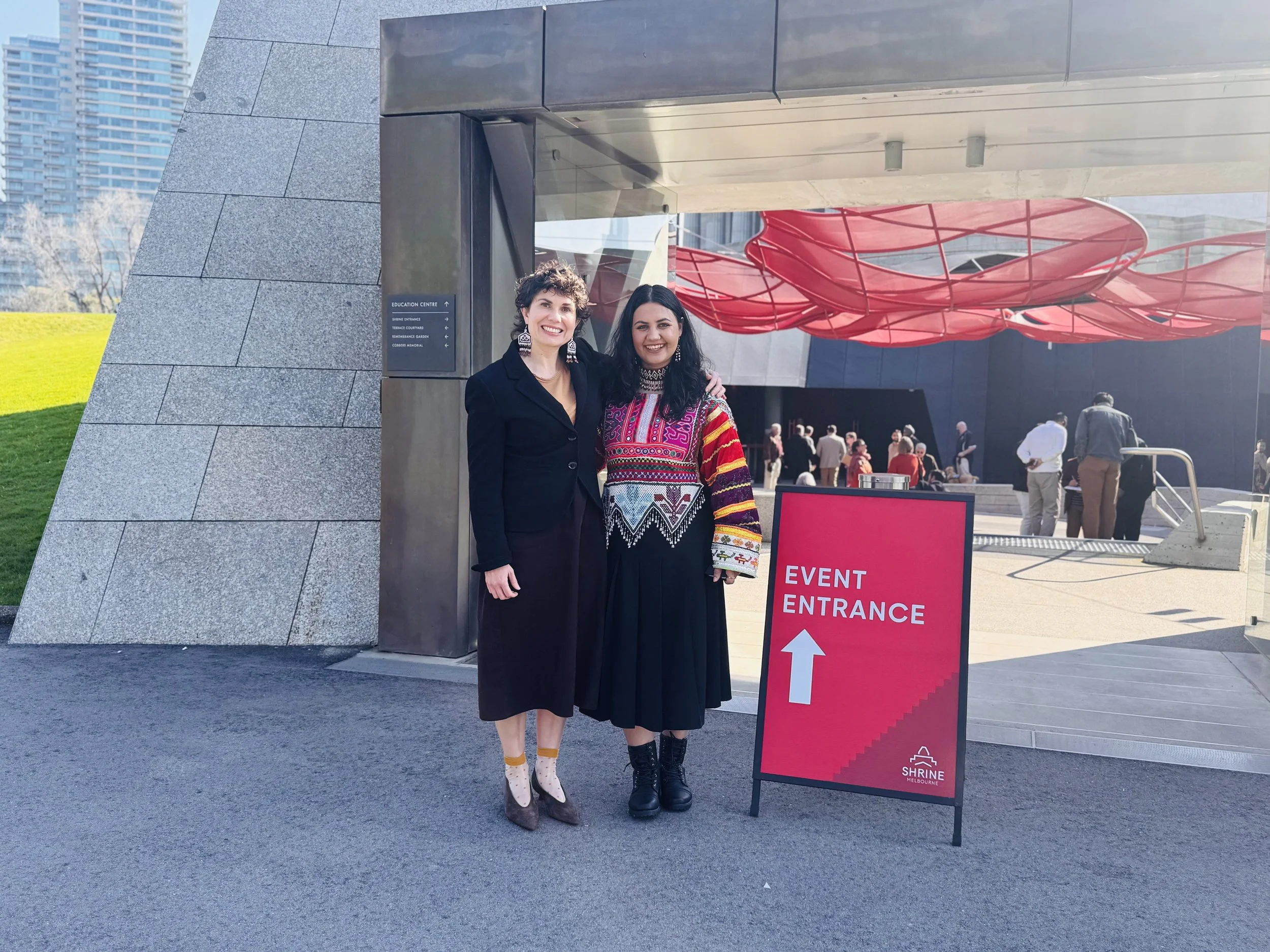
Extract from my opening speech, 16 August 2026:
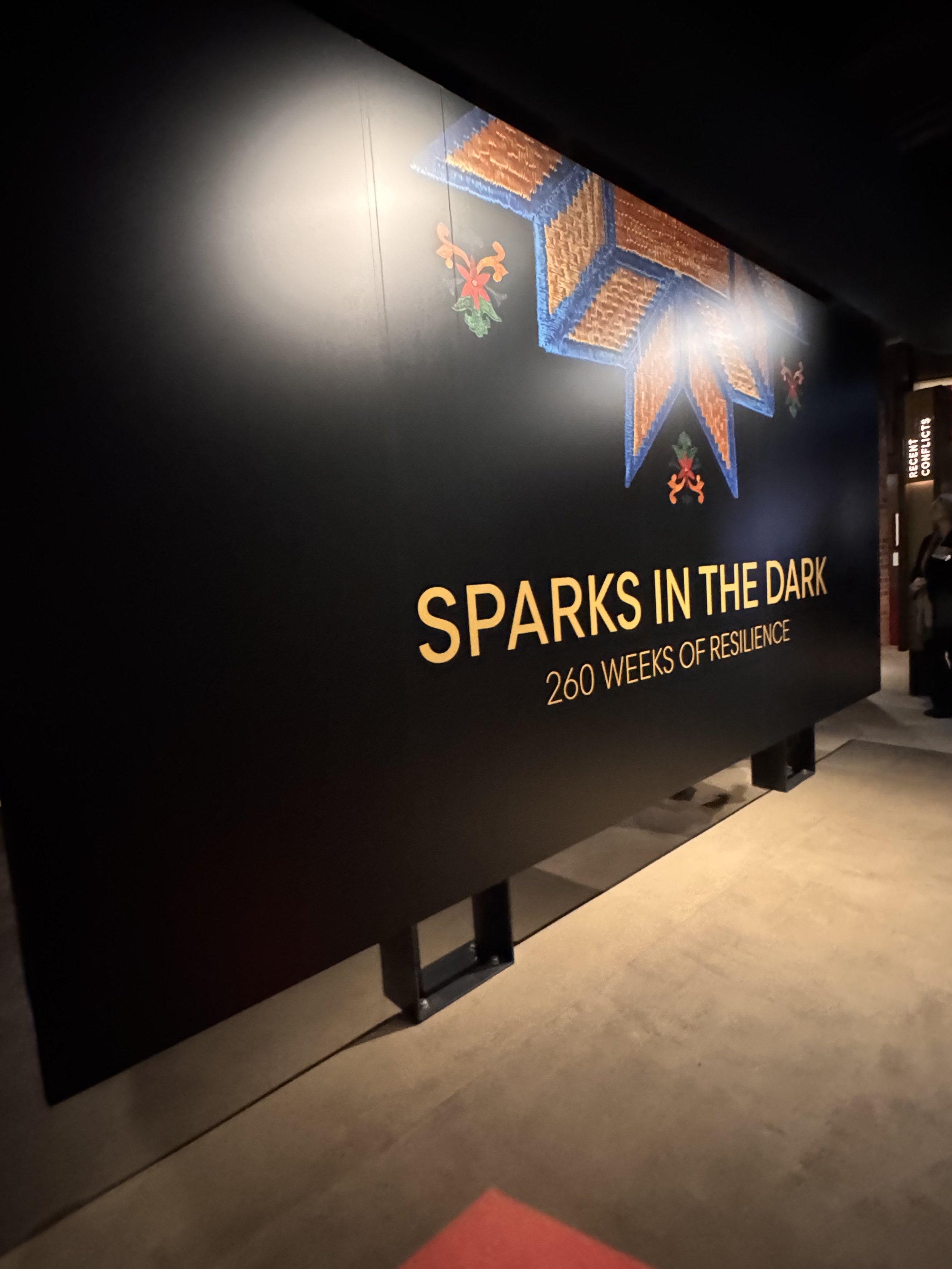
It’s an extraordinary honour to have this exhibition at the Shrine, which, for me, is Victoria's most significant place of commemoration. Having Sparks held here is enormously validating, as it acknowledges what has often been under-recognised by institutions: the experiences of women and girls, contemporary veterans, and the ongoing impacts of war on families.
But for me, at the heart of this exhibition is friendship.
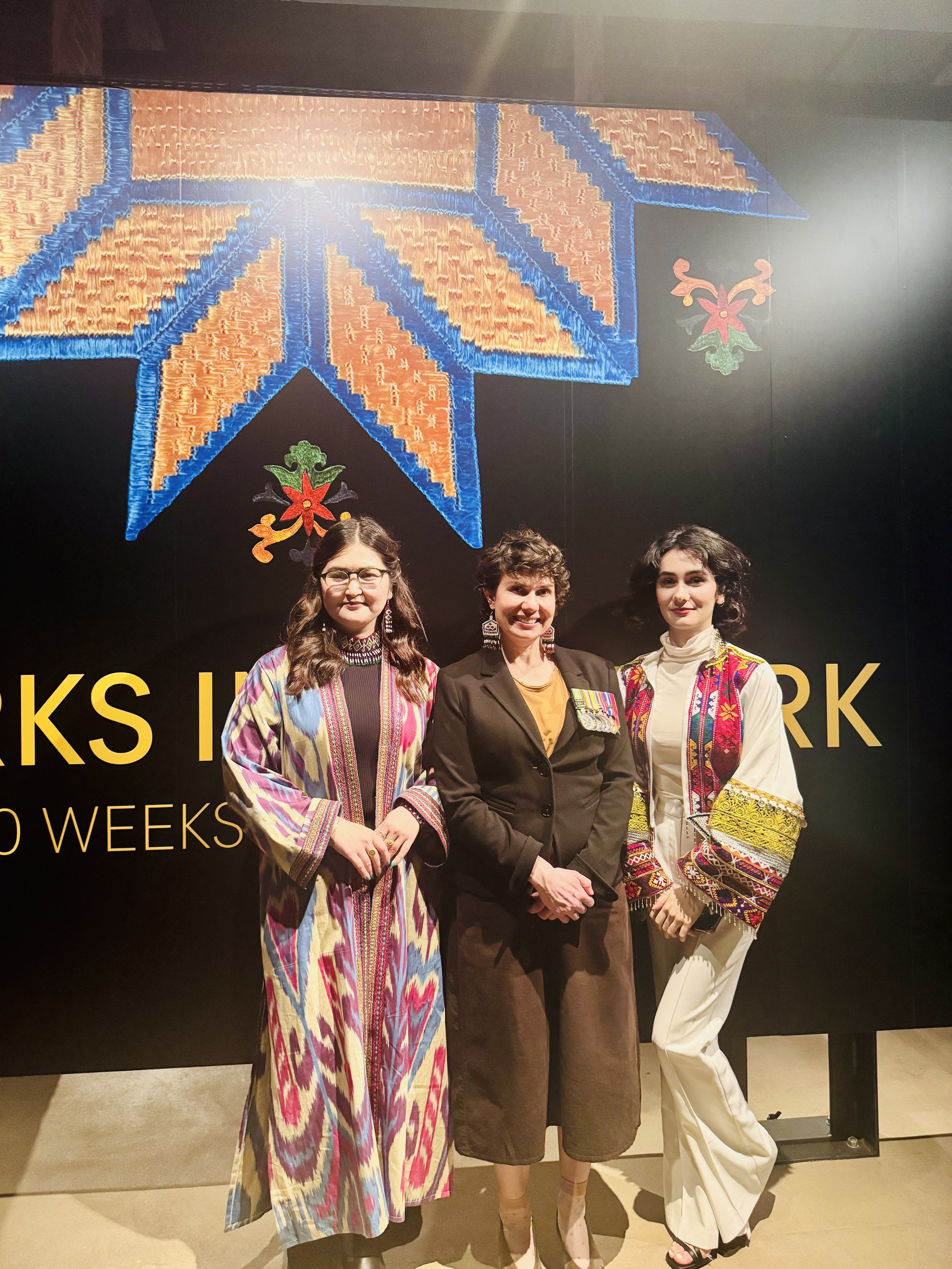
Last year, my friend Susan Hutchenson, who is also a veteran, artist and tireless advocate for Afghan women, introduced me to Mursal, an Afghan artist who had recently arrived in Melbourne.
When Mursal and I met last February, I had just completed Honours at art school after my 20-year Army career. I was trying to make sense of my life after the war through art.
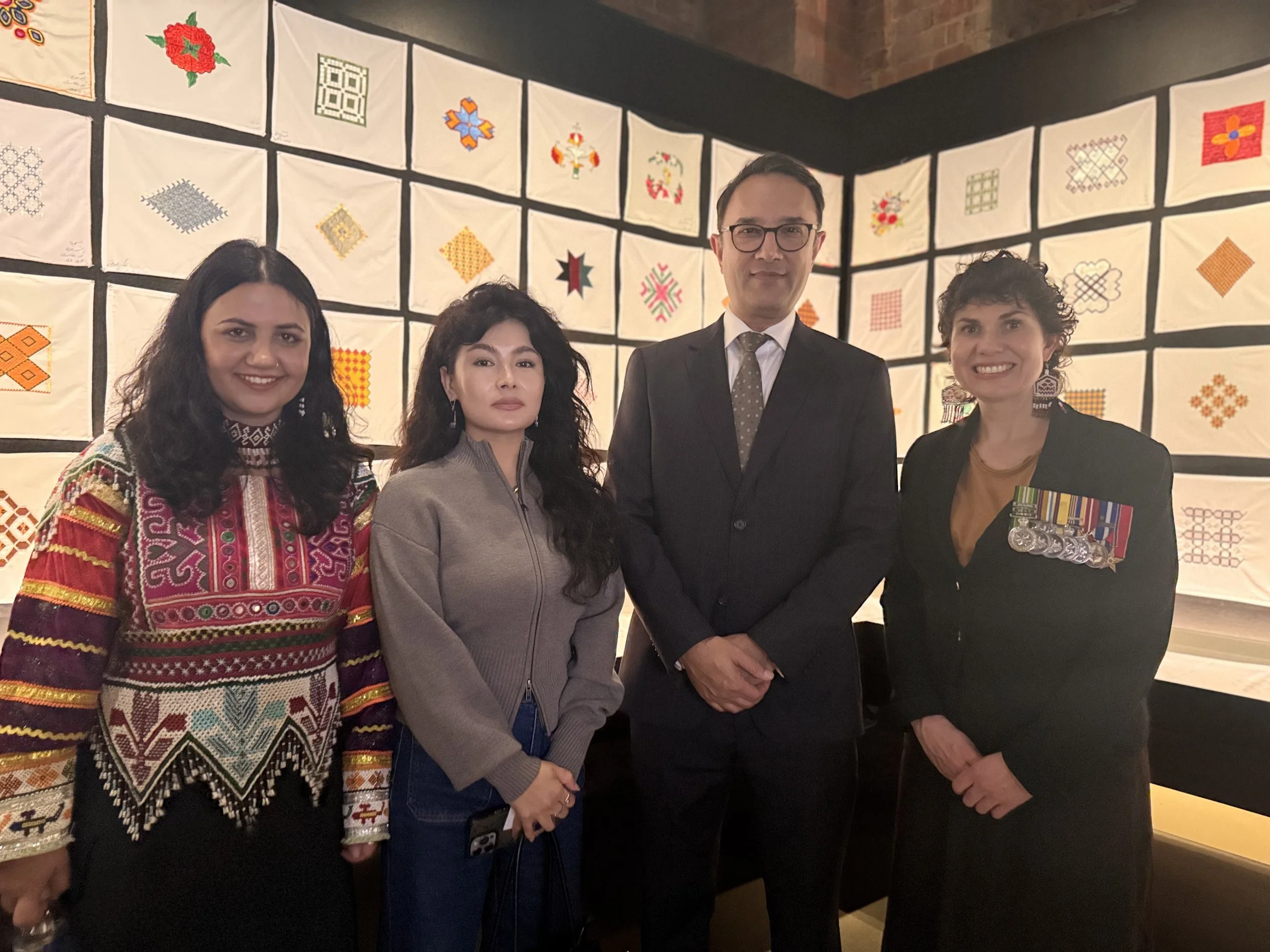
Over chia at a cafe in North Fitzroy, we realised that although we'd experienced the same war, we'd lived through it from very different perspectives. Mursal had fled Afghanistan after the Taliban returned to power, and I had served there as an Australian Army officer. A shared love for Afghanistan, grief for all that has been lost, and a belief that art should be impactful brought us together.
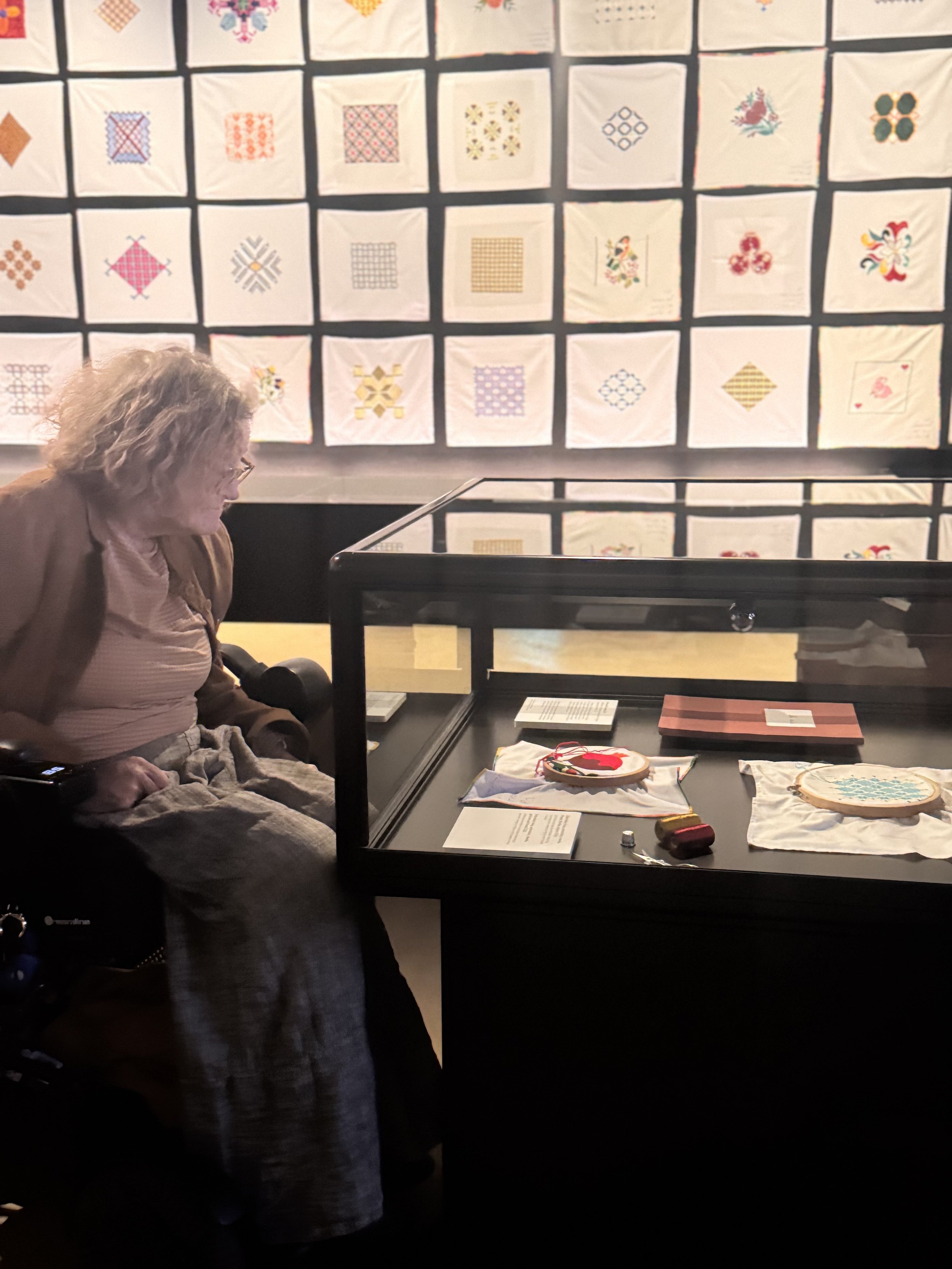
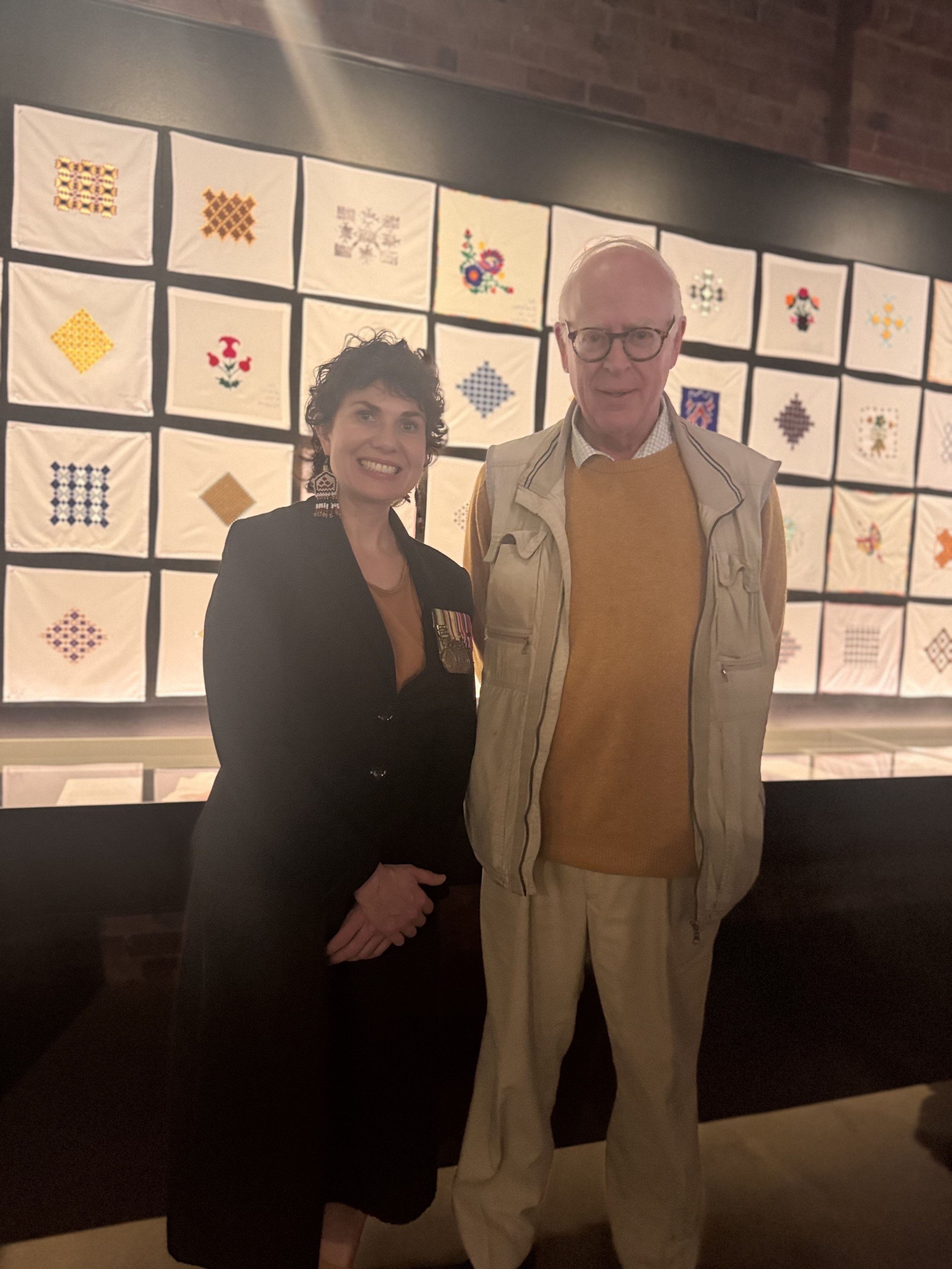
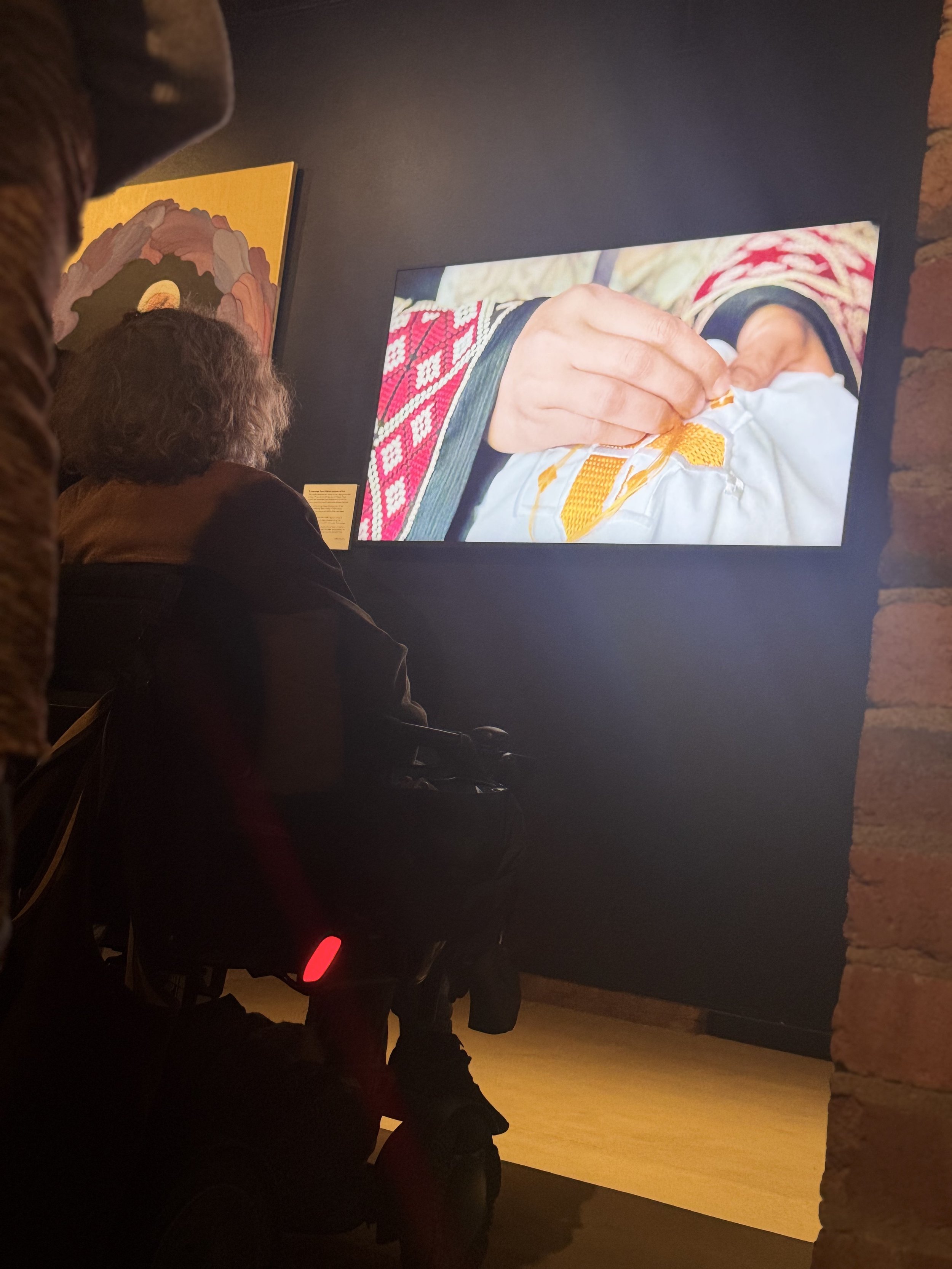
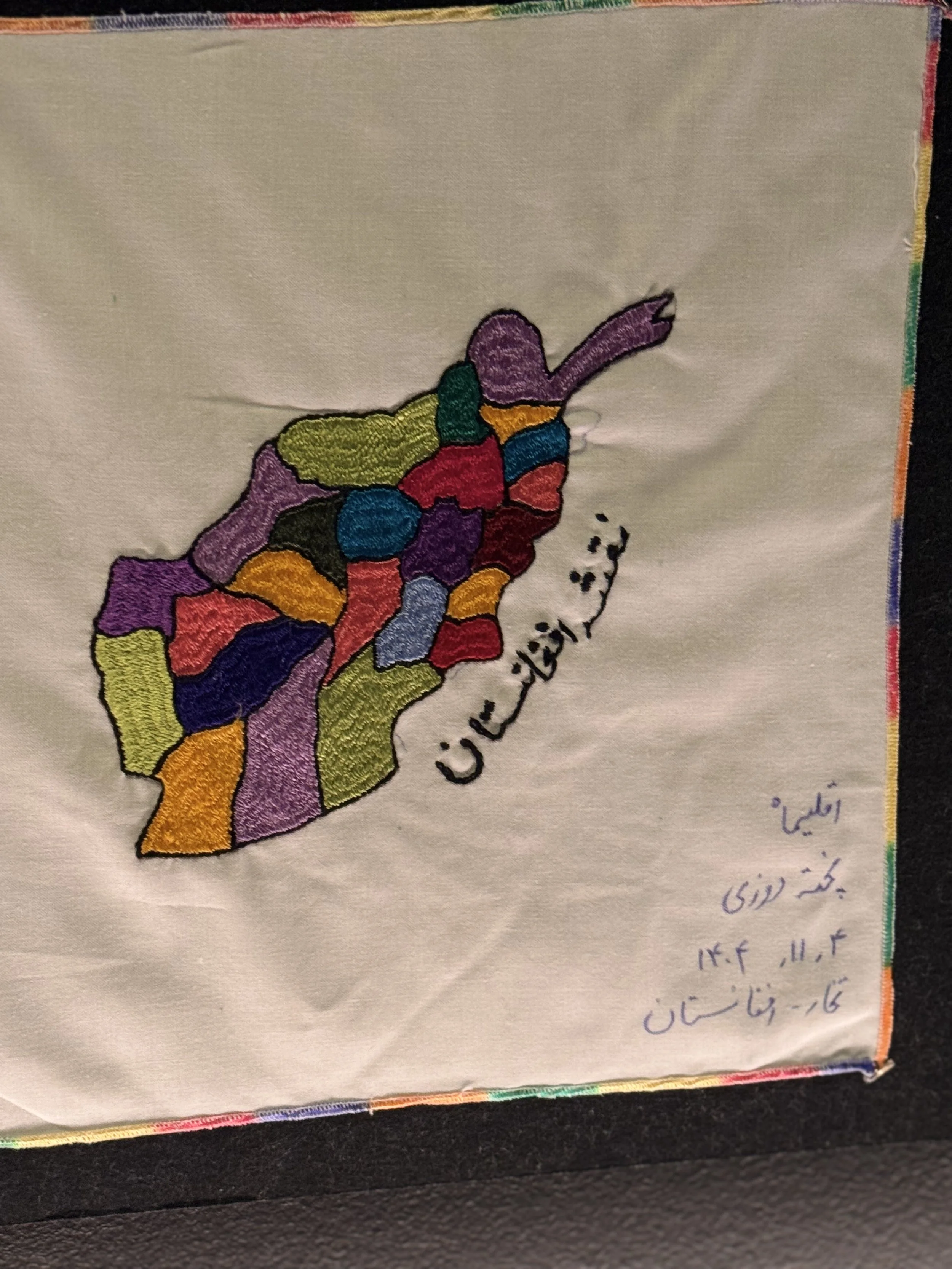
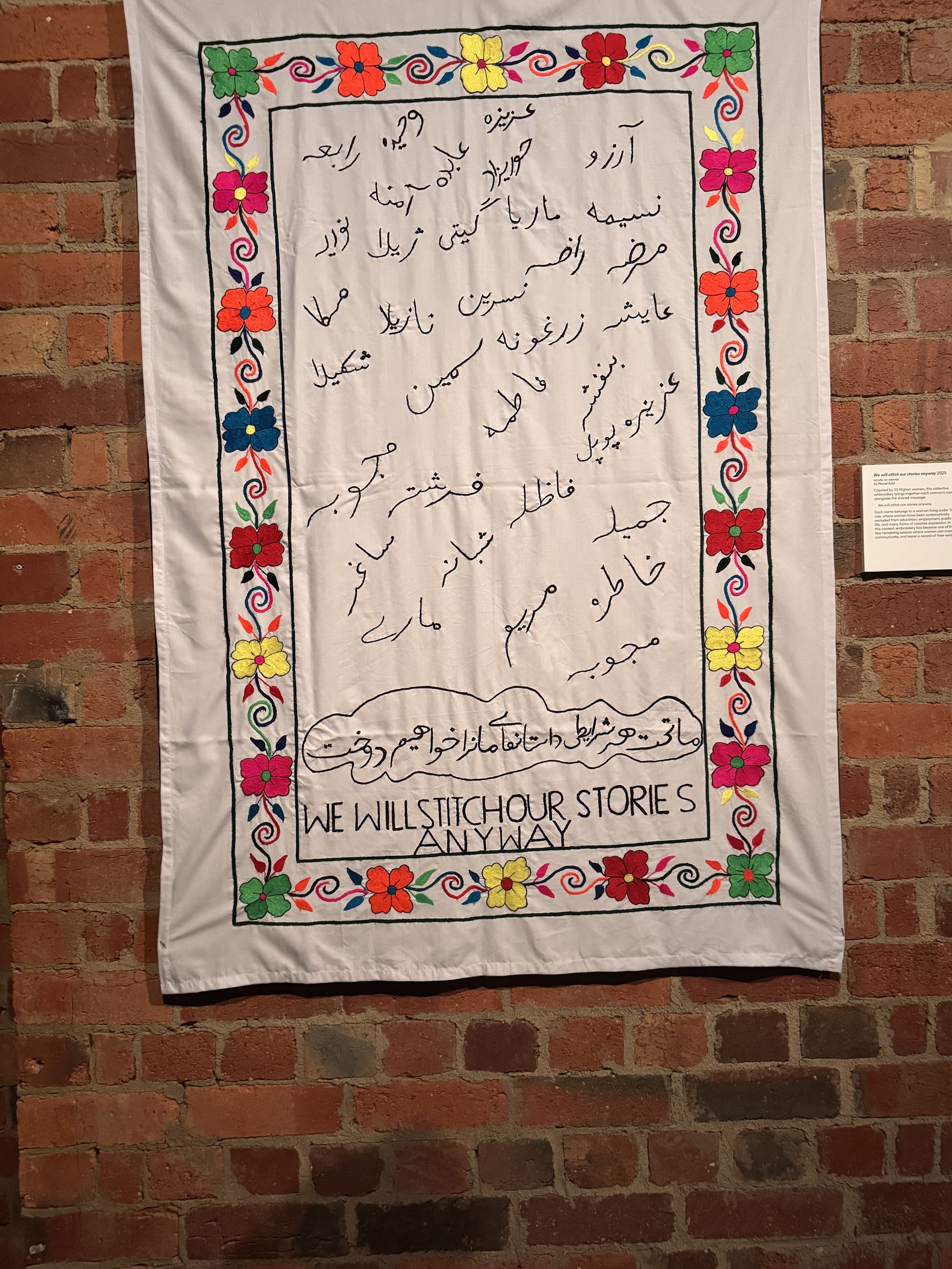
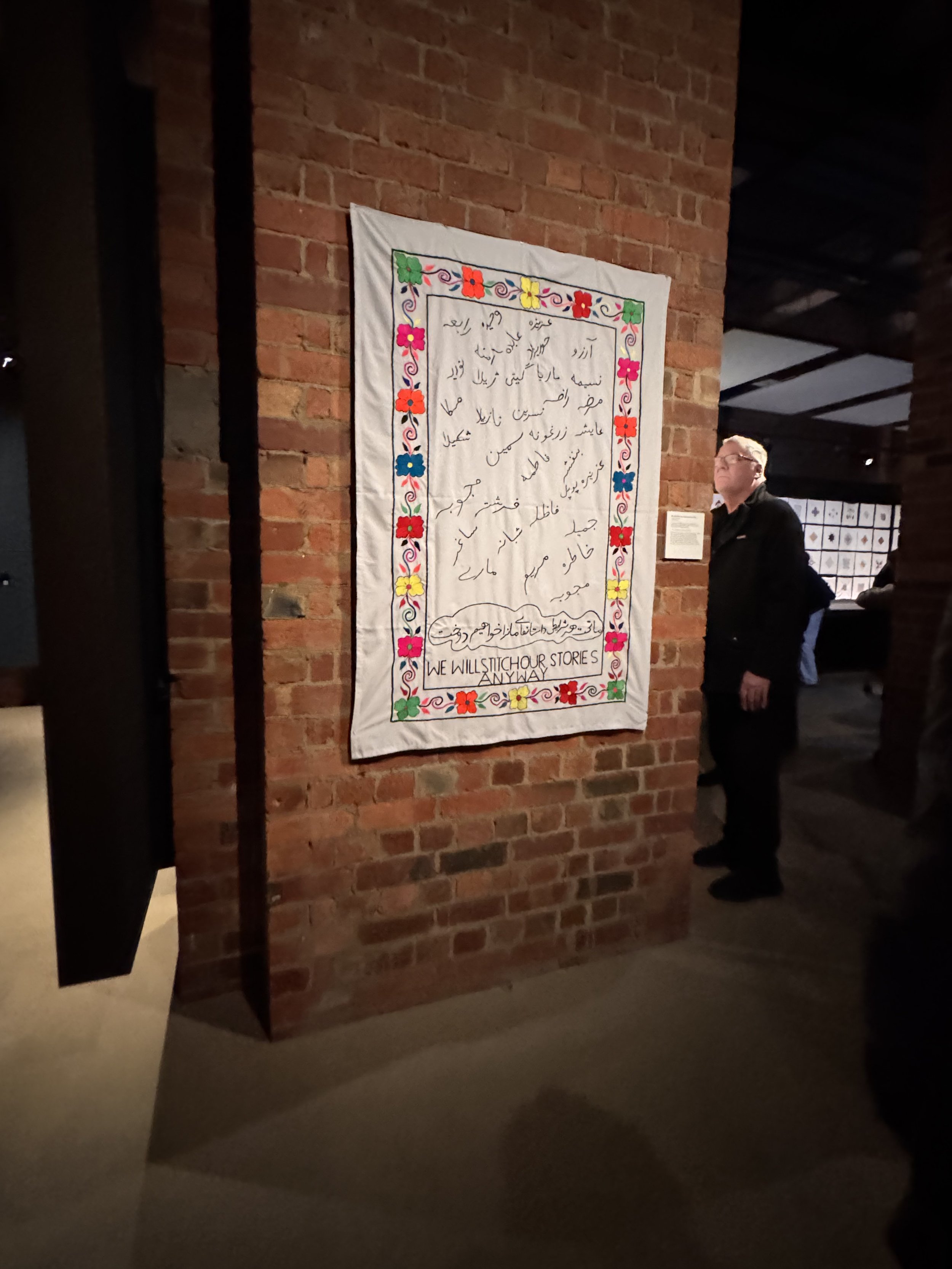
Mursal's vision was to display, on mass, 260 embroidered artworks by women still living in Afghanistan. The 260 artworks represent 260 long weeks, or five years, since Kabul fell. Together with incredible historic embroidered pieces from the Shrine's archives and new works by contemporary veterans and their families, this exhibition showcases hundreds of quiet acts of resistance, creativity, and pure grit and survival.
They are all Sparks in the Dark, or, as former Afghanistan Ambassador Wahidullah Waissi beautifully coined, ‘sparks of the heart’.
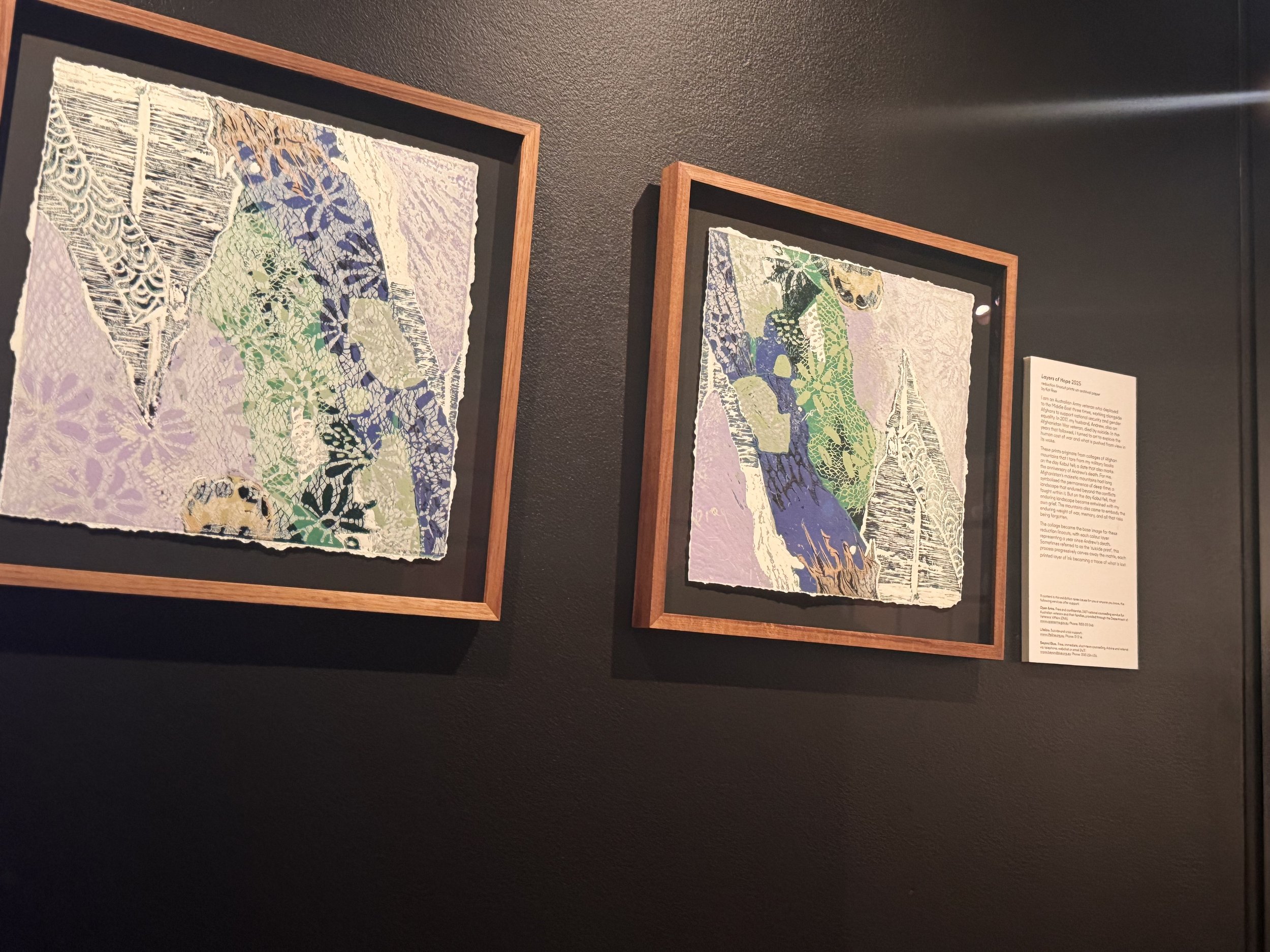
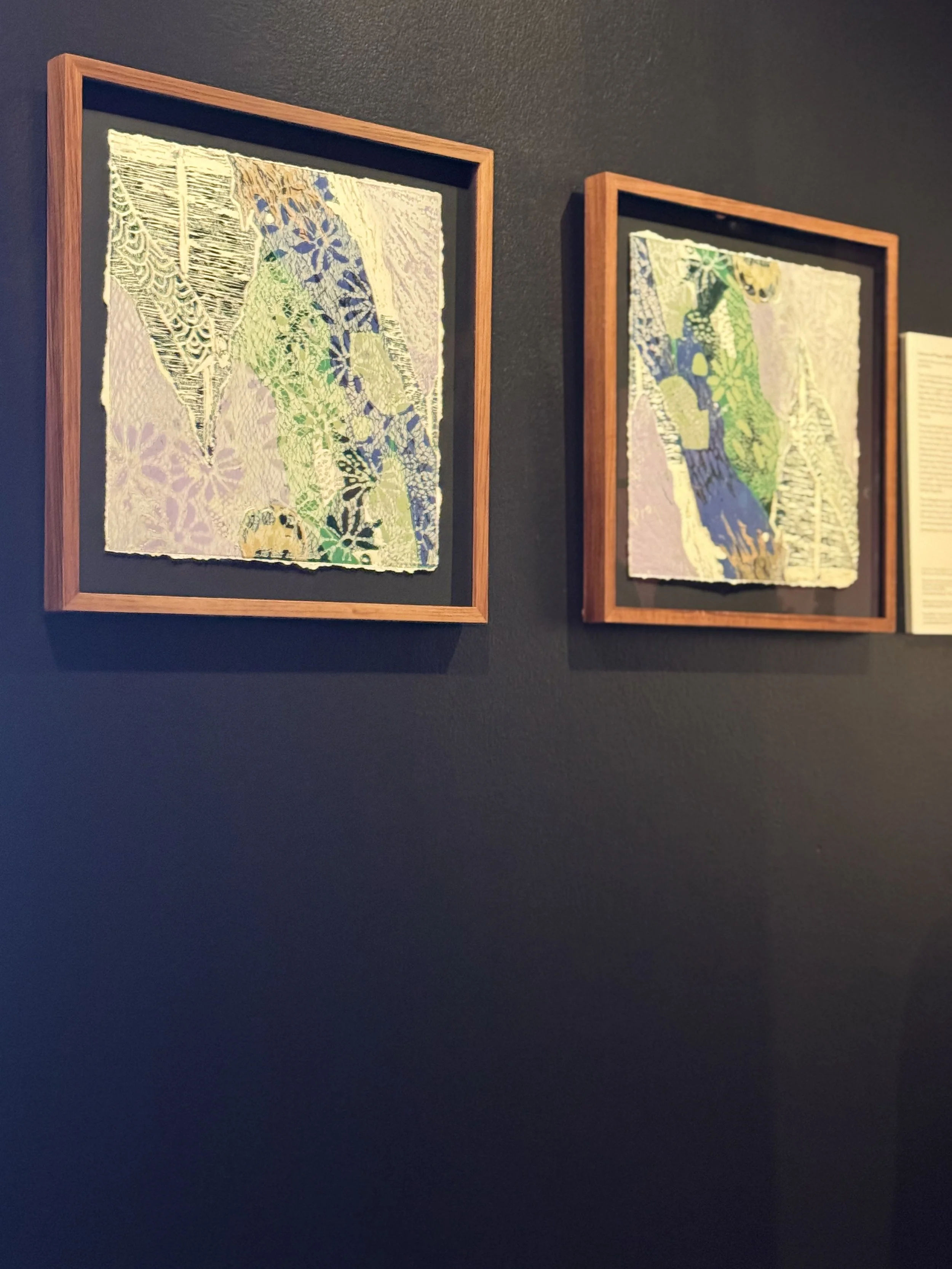
My own work, Layers of Hope, became another way to process war. It’s a multi-layered reduction linocut of the Afghan mountains. For me, Afghanistan's mountains came to embody the enduring weight of war, deep-time memory, and all that risks being forgotten. Printing them in the colours of the suffragette movement, at the scale of an embroidery, became my way of standing alongside Afghan women.
One of the greatest gifts of Sparks has been the friendships it has fostered. Before meeting Mursal, I wondered whether Afghan people might resent someone like me because of my military service.
Instead, I found generosity, gratitude and care. My Afghan friends understand the war’s complexity. They know Australians genuinely hoped for a more peaceful and equitable Afghanistan, and we still do. Across cultures, we have found shared grief, friendship and solidarity.
Mursal and I sincerely thank the Shrine of Remembrance, especially Kate Spinks, Katrina Nicholson and Maree Brannigan. Thank you, Sue Burgess, for your passion and foresight in establishing Sparks before you retired. The Shrine’s thoughtful and generous curatorial work has brought powerful stories to the heart of Victoria's place of remembrance. Thank you for warmly welcoming the experiences of Afghan women and girls, contemporary veterans, and families, which are an important part of Australia's war history.
Finally, thank you to my dear friend and collaborator, Mursal. This exhibition would not exist without your vision, courage, and unwavering commitment to Afghan women. Working alongside you has been one of the greatest privileges of my life.
As you all visit this exhibition very soon, I hope you'll feel the grief, resilience and hope behind the artworks. Most importantly, I hope you'll feel our friendship and see that we continue to build meaningful commemoration together. Because commemoration isn’t just about looking back. It’s also about how we care for one another now and how we ensure that no one, and no story, is forgotten.
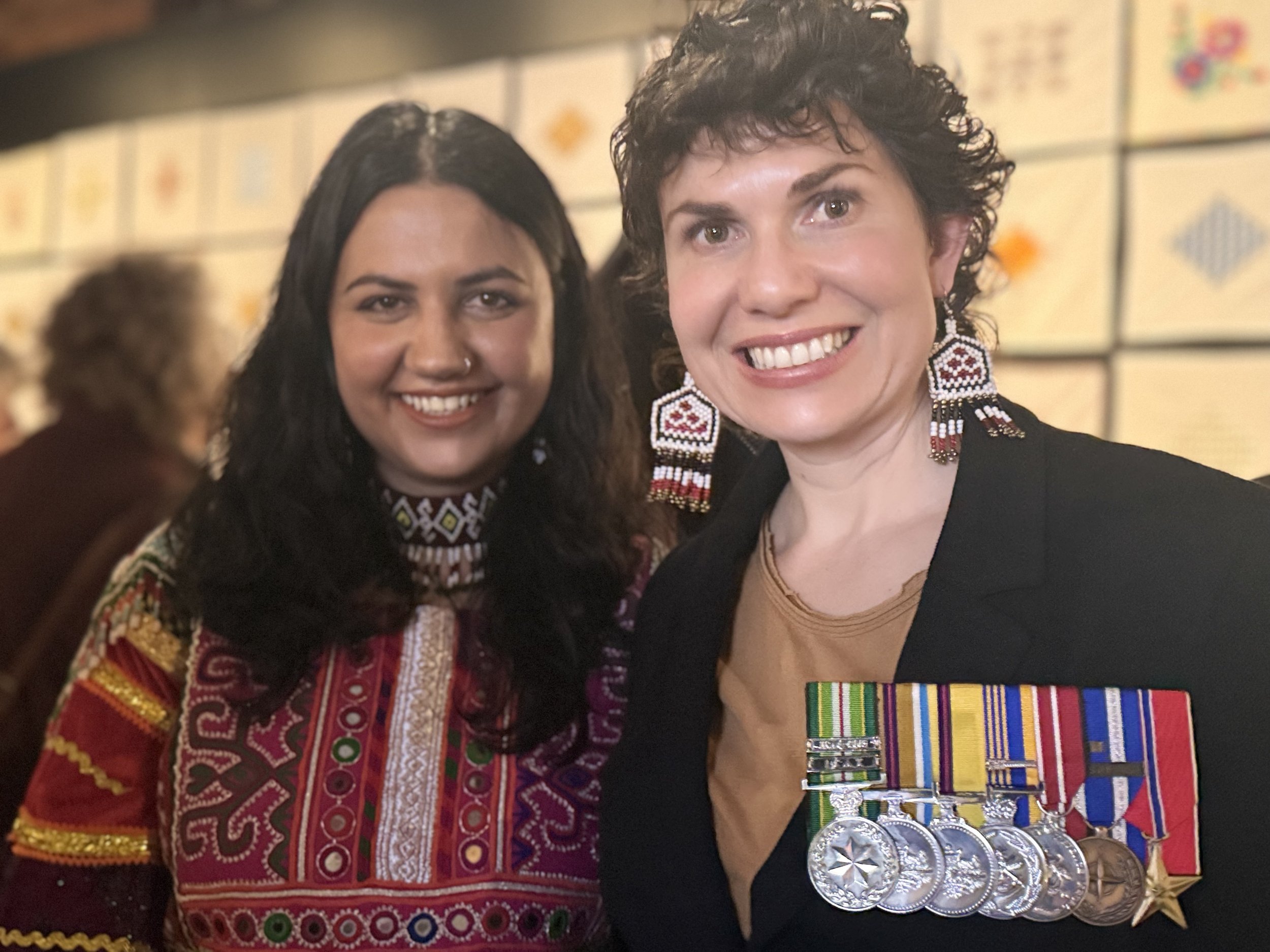
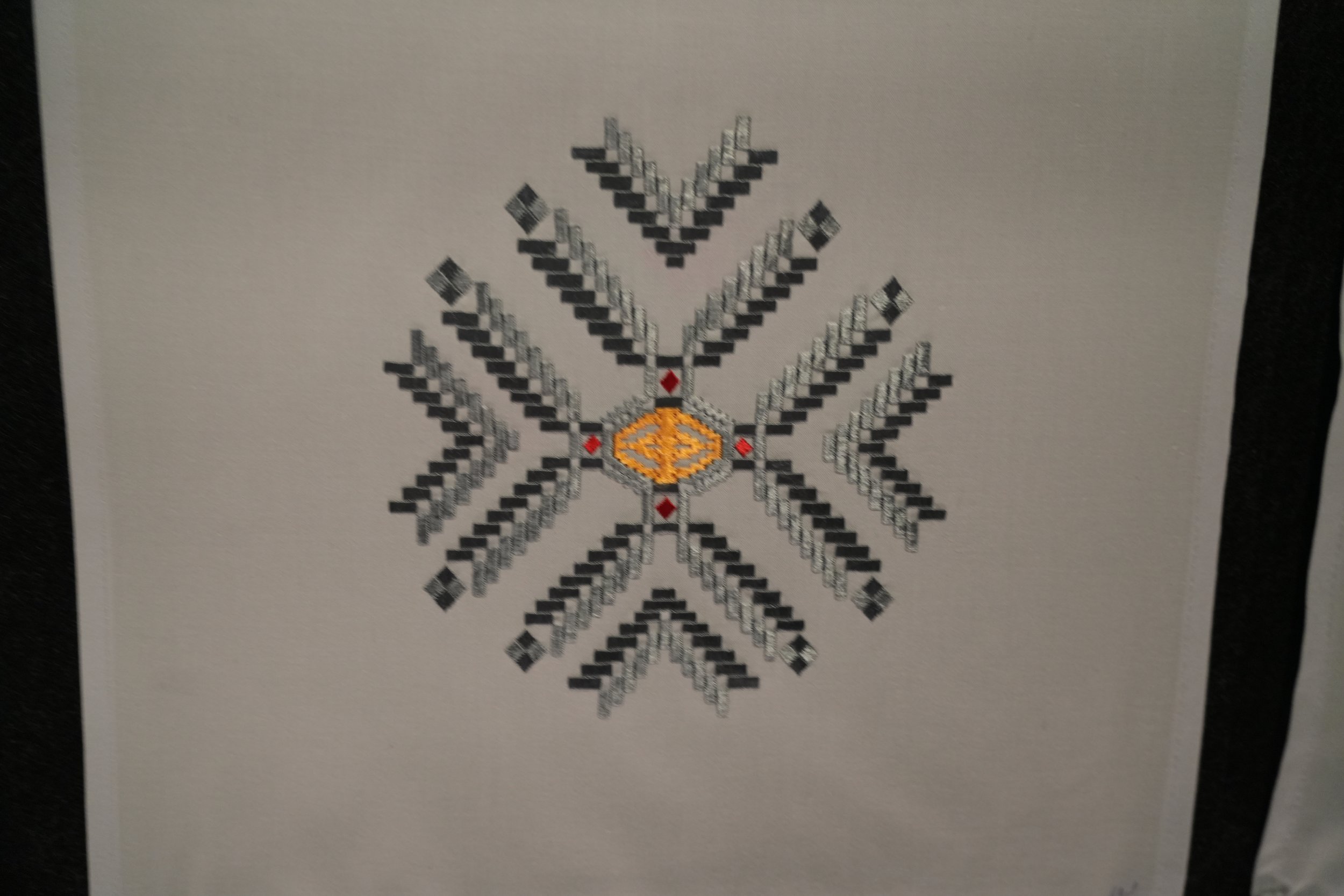
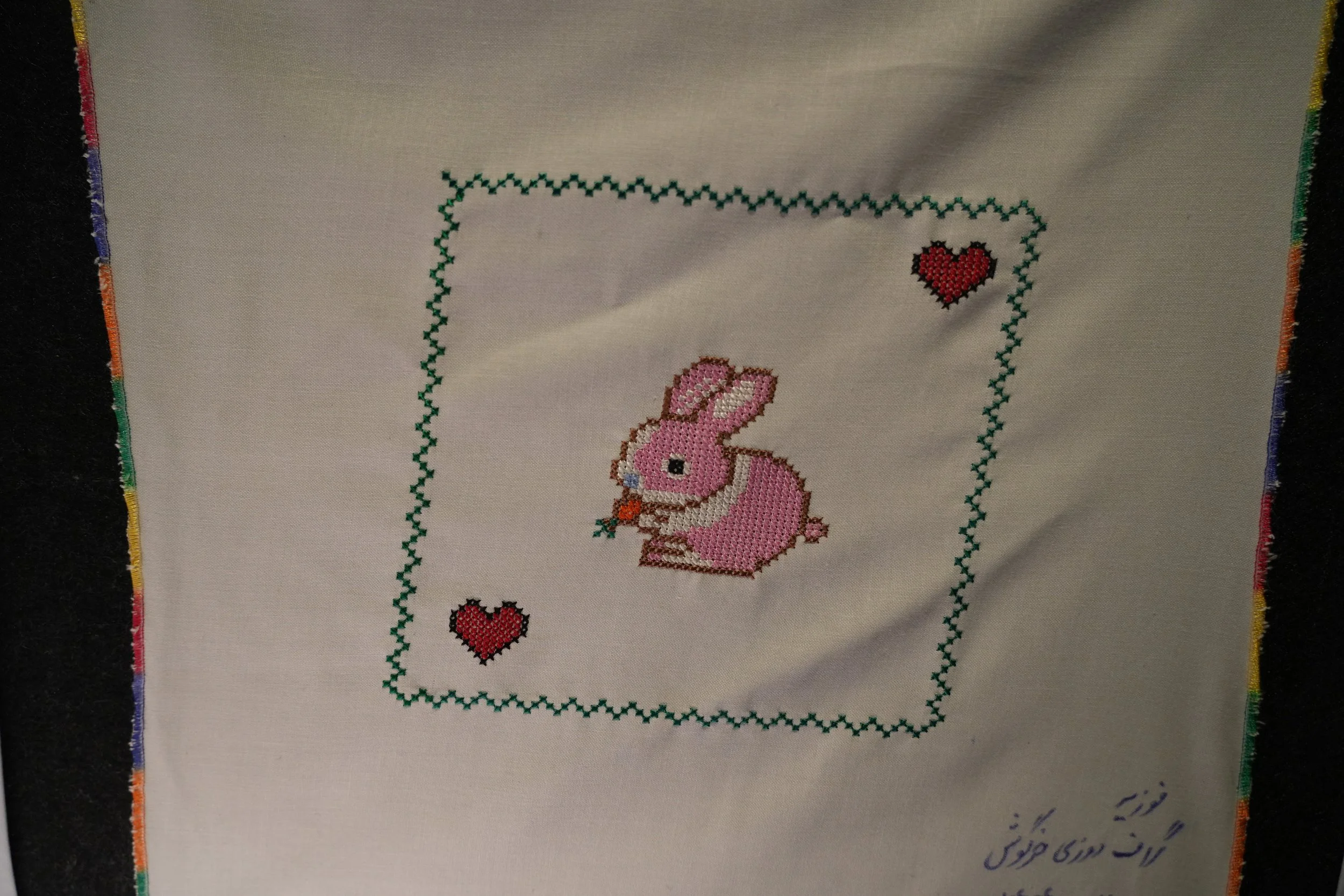
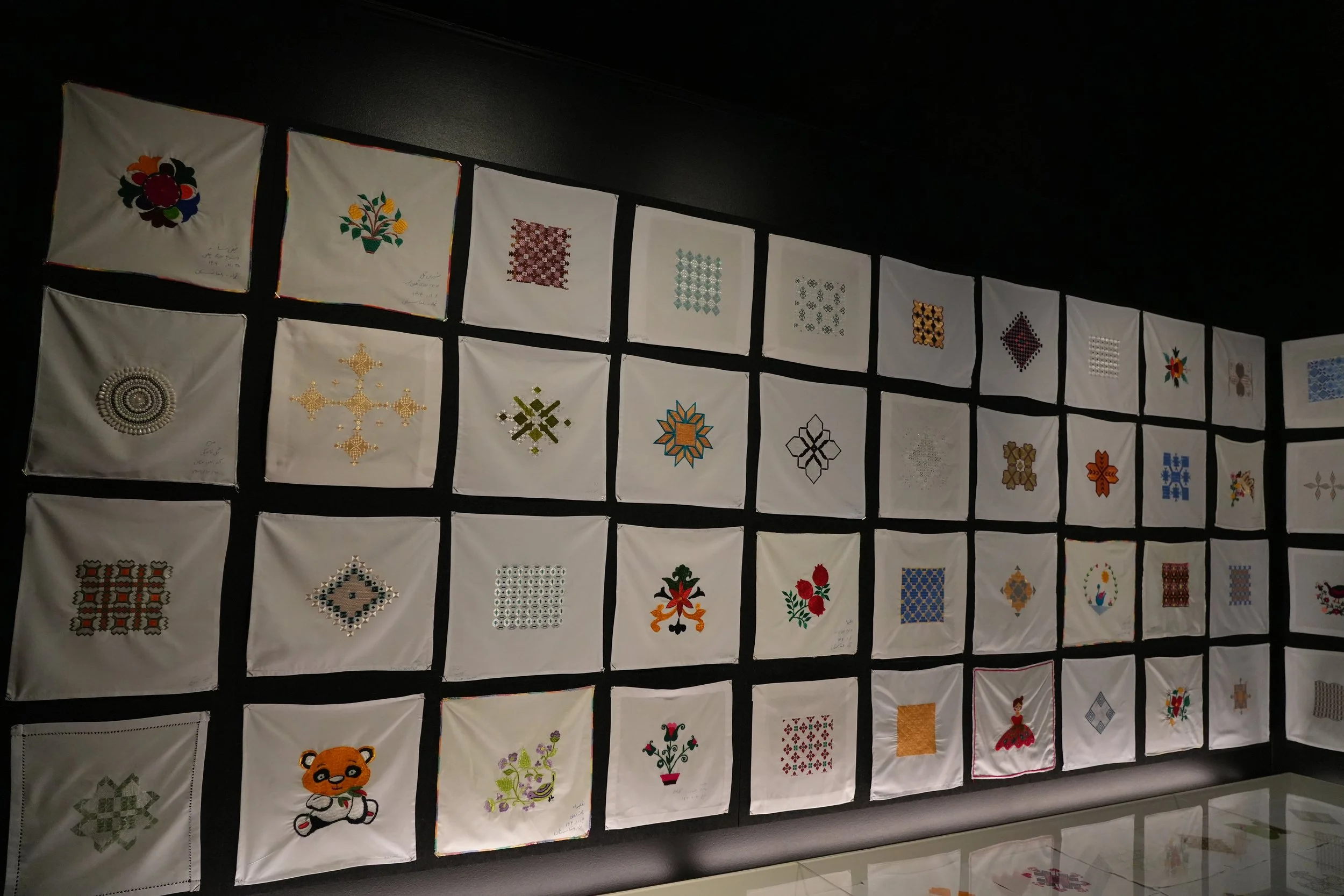
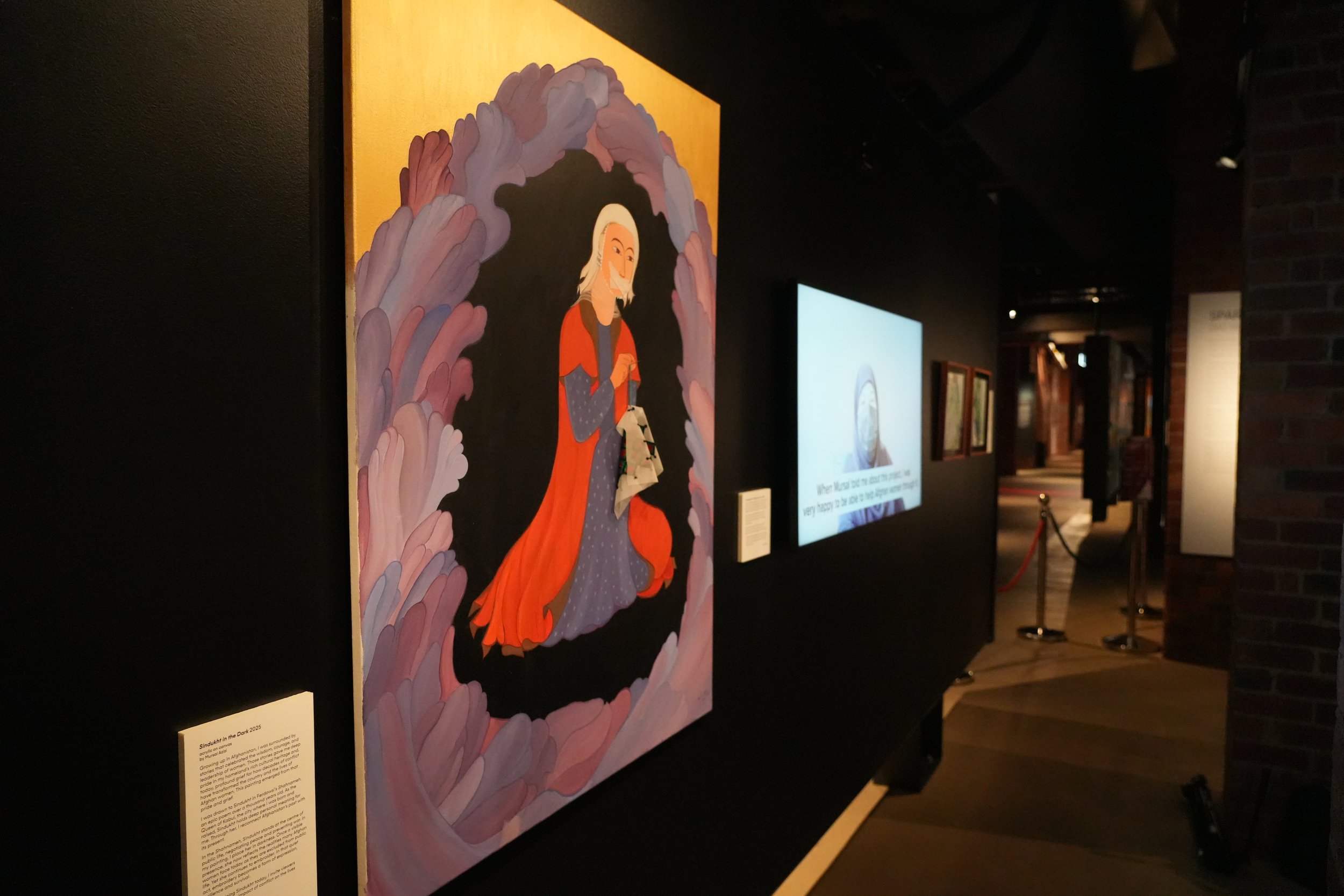
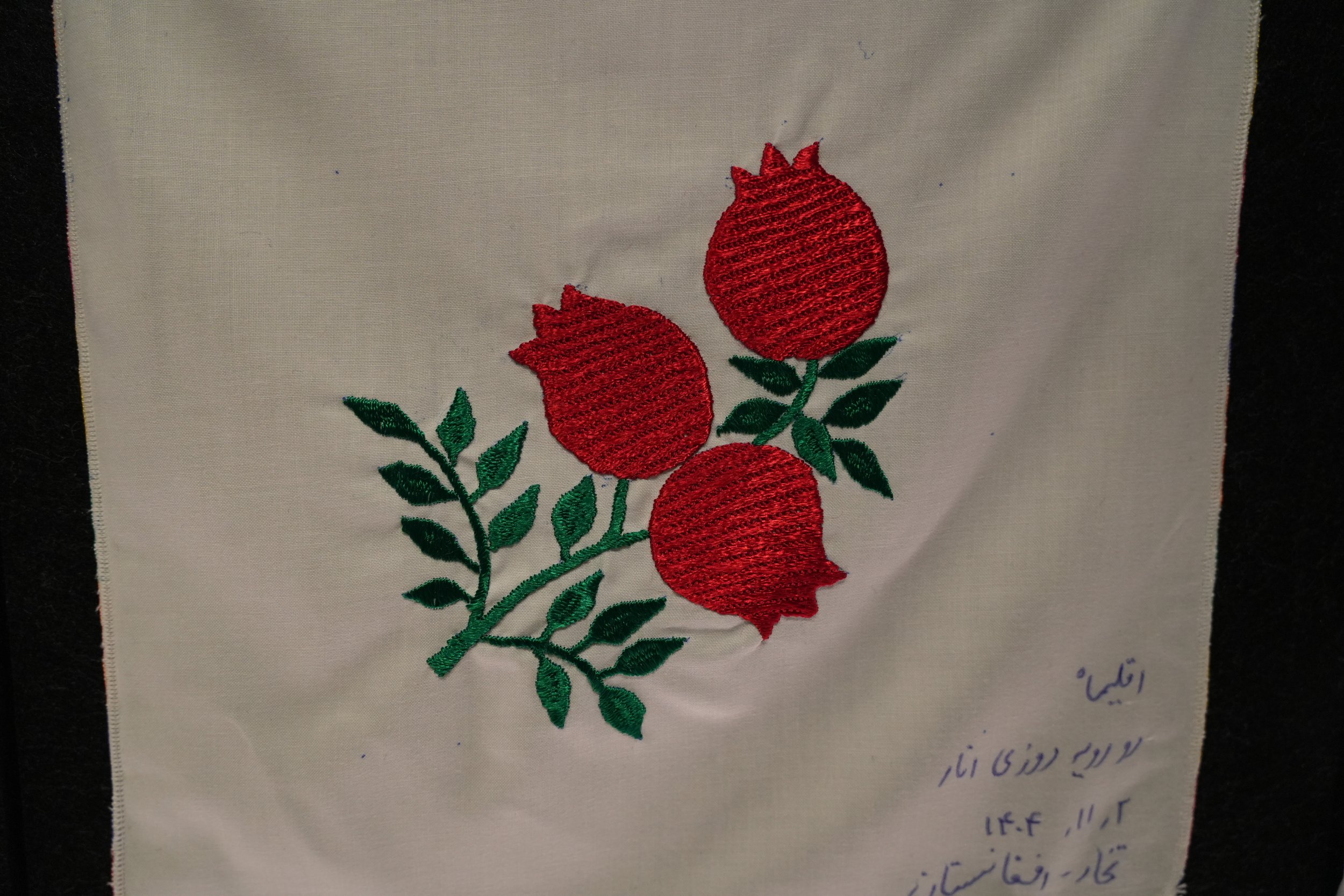
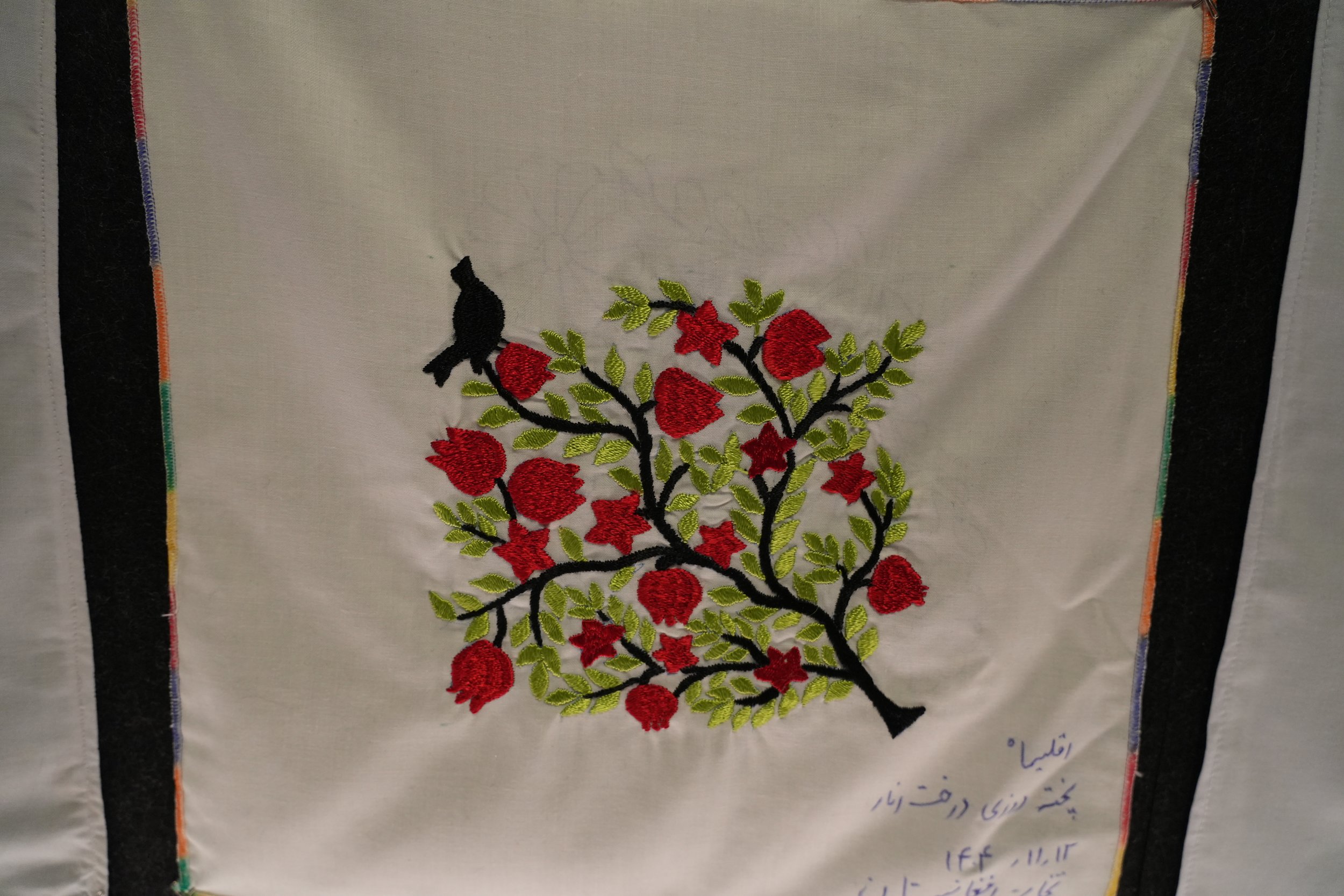
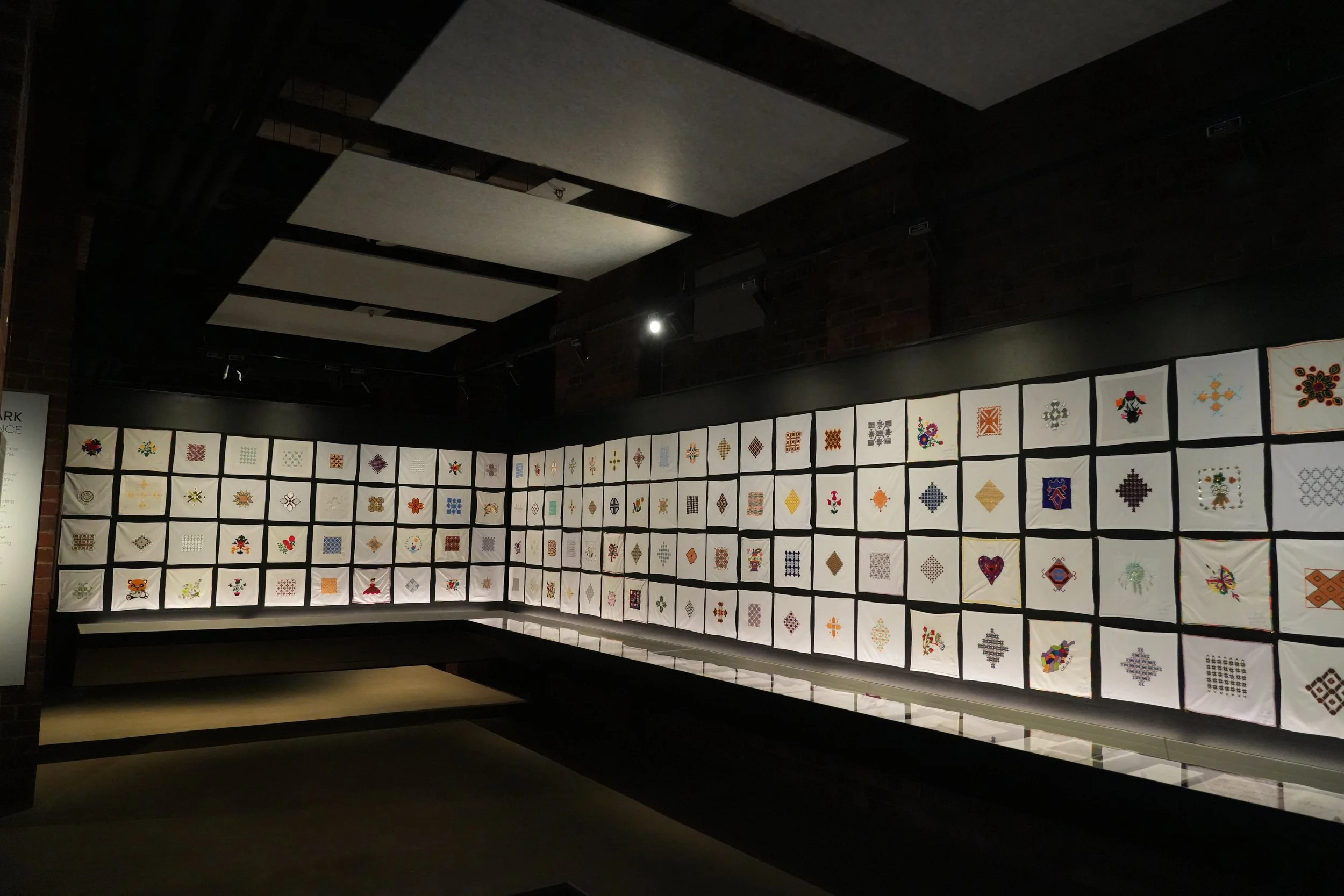
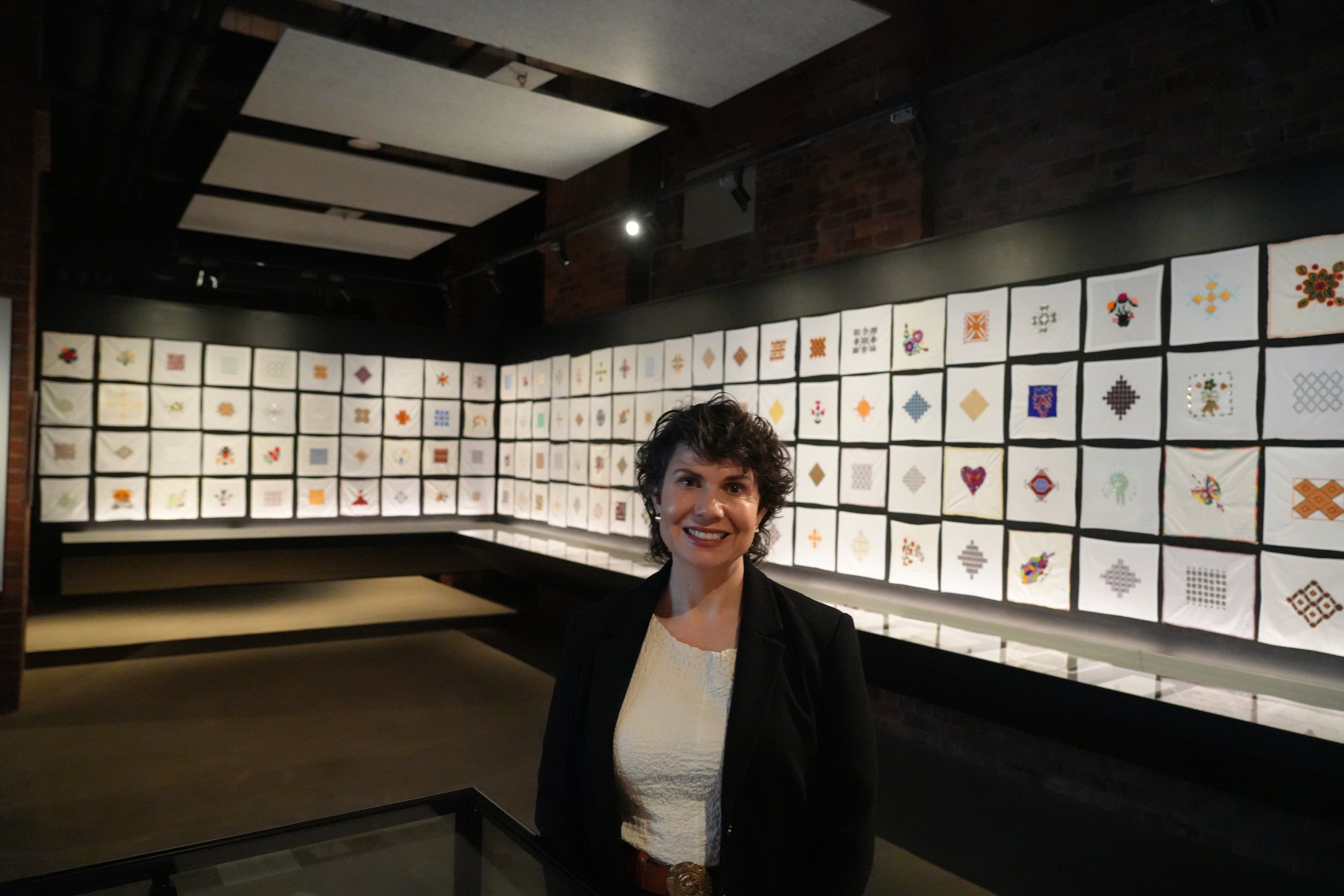
Image courtesy of RSL Victoria